

Schools can prepare a relief teacher handover in 15 minutes by keeping a standing classroom folder ready all year and adding only the day’s lesson notes when a teacher is away. The folder holds every fact that stays the same, so the morning job shrinks to a single page.
When a teacher wakes up too sick to write a long brief, that shift helps most. Mind Leap Tech works with schools on relief teaching, and on those mornings, the smoothest cover days start in a classroom that already explains itself.
This guide sets out a relief teacher handover checklist for the standing folder and what the day’s lesson notes should cover. You’ll also see a 15-minute timeline showing which staff member handles each step. Read on to set yours up.
Separating What Stays the Same From What Changes Each Day

Most handovers blow out because the teacher rewrites the roll, the timetable, and the fire drill route at 7 am. None of those details changed overnight, yet they eat the time needed for the lesson itself. You’ll know the feeling if you’ve ever typed out bell times with a fever.
So the fix starts with sorting every handover detail into two piles. One pile holds facts that last a term, like class lists, allergy plans, and evacuation routes. The other pile holds what shifts daily, which is mostly lessons, trips and duty changes.
Once both piles are sorted, clear teacher communication gets much easier, because the absent teacher only explains today. The standing pile needs a check once a term, and the daily pile rarely runs past one page (most mornings need far less than a full page).
The Standing Relief Folder: What Every Classroom Should Have Ready Before Anyone Calls in Sick
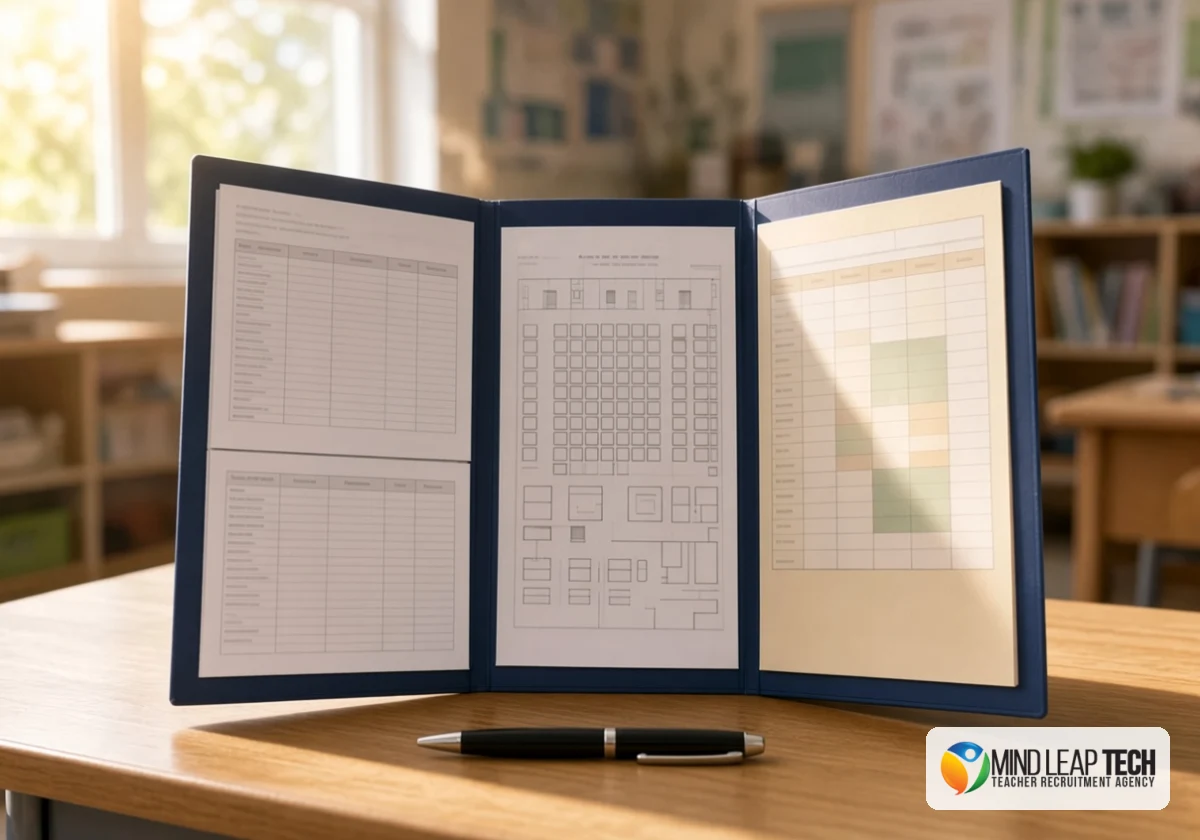
A standing folder works just as well in week 3 as in week 38. Teachers build it once at the start of the school year, and the office checks it each term when rolls and rosters change.
Below, we’ve explained the five parts of a relief teacher handover checklist that a school can build once and update each term.
1. Class List, Seating Plan and Who Leaves Early
Start with a class list printed from your student management software and add photos beside each name where your consent forms allow it. A reliever learns names fastest when faces sit beside them, especially with new entrants.
Next, add a dated seating plan so the reliever can trust it is current. Friendships and fallouts shift over the year, and an old plan from Term 1 can put two rivals side by side by Term 3.
Finally, list the students who leave for reading support, music, or early pickup. Write the time and who collects them, so the reliever lets the right child go.
2. The Daily Timetable and the Routines Behind It
Print the weekly timetable with bell times, specialist sessions and duty slots marked. Without those marks, relievers often miss a library slot that only lived in the teacher’s head.
Beside it, note the classroom routines students expect, like the morning roll, brain breaks or lining up for lunch. Classes settle faster when the reliever runs their usual pattern. That’s why each routine works best as one line the reliever can follow straight away.
3. Behaviour and Wellbeing Notes Written With Care
Keep behaviour management notes short, factual and focused on what helps. Instead of a label like “difficult“, write what sets the student off, the early signs and the strategy that settles them. A note such as “Sits near the door and needs movement breaks” gives a reliever a plan (where a label only gives them a worry).
Then record health needs, like allergies, inhalers, and who holds the medication. These details keep a student safe if something goes wrong at morning tea.
Pro Tip: Store this page in a closed sleeve, so the reliever reads it and visitors can’t.
4. Emergency Procedures and the Staff to Call
The Ministry of Education states that all schools must have an emergency management plan in place. Your folder should hold the classroom page of that plan.
Along with the fire, earthquake, and lockdown routes, mark the assembly point clearly on the page. A reliever from another primary school, however, won’t know which gate your class uses, so name it outright. Then add the office, team leader and first-aid contacts, and check those names every term.
5. Where the Teacher Resources and Spare Activities Live
Show the reliever where the teacher resources live, such as whiteboard markers and class sets of readers. Labelled shelves help here, because the reliever can then find each item without digging through every box.
On top of that, add a spare pack of tasks that suit your year level on any day, such as maths games, a writing prompt, a craft activity and a quiz. These cover a late start or a lesson that finishes early. We’ve seen relief teachers grab this pack more than any other page in the folder. It disappears faster than the last biscuit in the staffroom (especially on wet lunchtimes when everyone stays inside).
What Should Substitute Teacher Lesson Notes Include for the Day?
That spare pack covers the gaps, but the day’s real teaching still needs its own page. Substitute teacher lesson notes should include the learning goal, the resources needed, an early-finisher task, and where completed work goes. Each detail answers a question the reliever would otherwise take to the office.
Now for the tricky part: most teachers write too much. A full lesson plan copied from your planning document buries the key steps, and the reliever skims it while the class waits at the door. Keep each block to three or four lines, ordered by the timetable, so the reliever can glance down the page between bells.
If you’re the one calling in sick, picture what you’d want on the desk at 8.30 am in a room you’ve never seen. In our experience with short-term cover, the best notes name the exact page number, Google Slides file, or worksheet. A note like “carry on with fractions” leaves the reliever guessing, whereas “maths book page 42, questions 12 to 20” shows exactly where to start.
With that in mind, set out every block in the same order. A reliever looks for these five details first:
- The learning goal in one plain sentence
- The exact resources, with page numbers or file names
- Any students who need adapted work or extra support
- An early-finisher task that needs no explaining
- Where finished work goes and what to mark
Leave space at the bottom for the reliever to record absences and the last task each group finished. That way, you’ll know exactly where to pick up when you’re back tomorrow.
[Replaced “how far the class got” with a concrete record of the last task each group finished, and made the payoff more personal and direct.]
A 15-Minute Classroom Handover Plan for the Whole School
From here, the handover becomes a team job with clear roles. Imagine the office manager, the team leader, and the absent teacher each knowing their part before the phone rings. Once the folder exists, the timeline below shows who does what in the quarter hour before the bell.
| Time | Who | What they do | Why it helps |
|---|---|---|---|
| 7.00 am | Absent teacher | Contacts the office and writes the day’s lesson notes | Gives the office a firm start on booking cover |
| 7.05 am | Office manager | Books the reliever and pulls the standing folder | Saves the reliever hunting for the right room |
| 7.10 am | Team leader | Adds duty changes, trips, and assembly updates | Covers daily facts the absent teacher may not know |
| 7.15 am | Office manager | Prints the notes and leaves the folder on the desk | Lets the reliever read everything before students arrive |
So, it’s clear that the team leader’s step carries the most risk, because a missed duty change can leave a playground without a teacher. Write each person’s step into the staff handbook, so a new office manager can follow it in their first week.
Build Your Relief Folder This Week, Then Forget About It
A relief handover takes 15 minutes when the folder already holds the facts that don’t change. On the day, the only job left is adding that morning’s lesson notes.
Pick one classroom this week and fill in the five parts of the folder. Then share that template across the whole school so every room follows the same pattern.
Mind Leap Tech supports New Zealand schools with relief teaching and smoother classroom handovers. Contact Mind Leap Tech to talk through your relief folder and set your staff up for easier cover dayso