
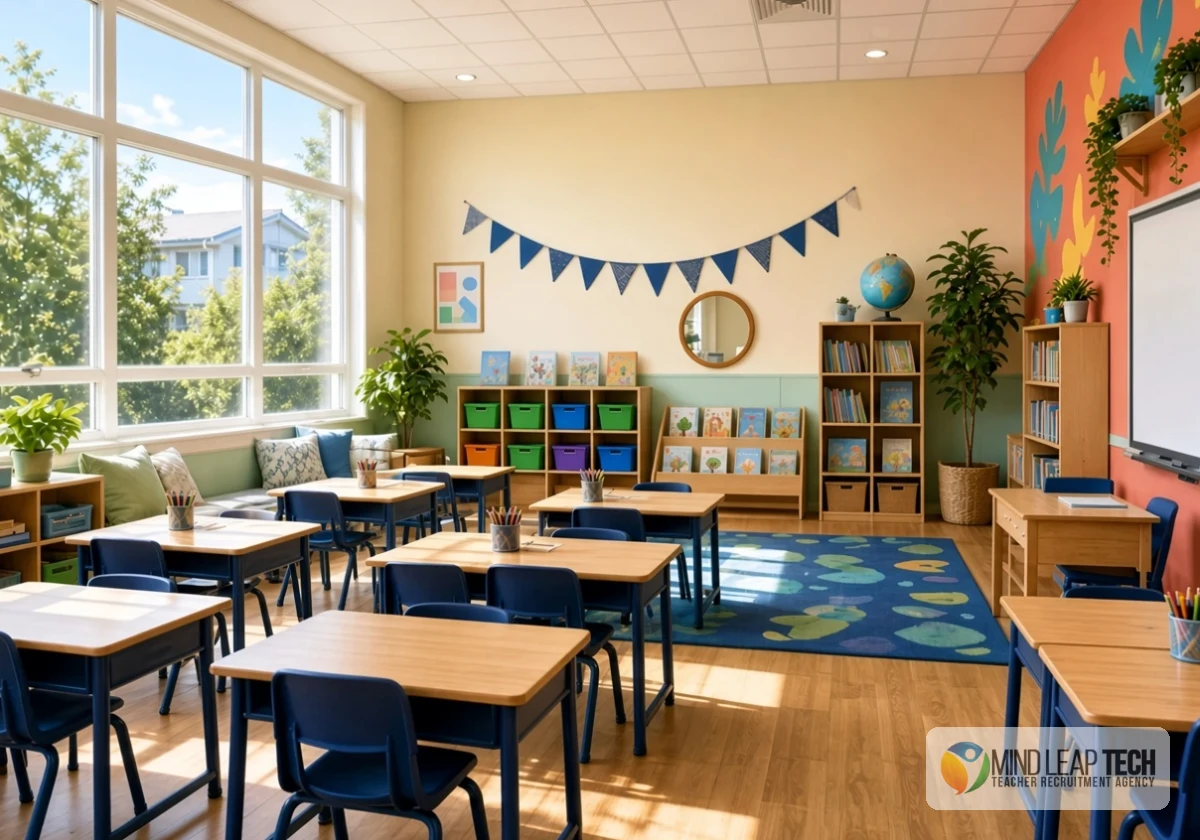
A teacher demonstration lesson that reflects your skills is a short, tightly planned lesson built to show the panel how you teach rather than everything you know. You get a time slot, a class of strangers, and adults taking notes at the back.
That setup tempts many candidates to cram in every activity they own. At Mind Leap Tech, we help teachers with exactly this problem, because an overloaded lesson hides the skills it’s meant to show.
This guide covers what NZ panels look for, how to plan from the school’s brief, how to manage unfamiliar students, and what fits a 10-, 30-, or 50-minute slot.
Read on before you start planning.
What Does a Teacher Demonstration Lesson Need to Show an NZ Interview Panel?

A teacher demonstration lesson gives an NZ interview panel a chance to see how you connect with students, organise learning and manage behaviour. Since the panel may include senior leaders and a curriculum lead, each person will look for different teaching skills.
Building a connection with students is one of the first things the panel will notice. They’ll pay attention to how you learn names, respond to answers, and adjust your tone to suit the class. These small actions show how teachers communicate with students in a real classroom. A seating plan or name stickers can help you address students by name from the start and build rapport as the lesson progresses.
Once students feel comfortable, the panel will look at how you guide their learning. A clear introduction, a main activity and a short review at the end show that you can break a lesson into steps students can follow. This structure also helps the panel see how you’d organise learning across a full school day.
Your teaching approach should also reflect an understanding of the school’s community. Before the interview, read the school’s website and look for its values. You can refer to one of these values during your lesson or use a te reo Māori greeting (such as kia ora, which means hello) you’re comfortable with. Choose something you understand and can use naturally, so it feels genuine rather than rehearsed.
Building a Teaching Interview Lesson Plan From the School’s Brief to the Final Minute
Many candidates plan a lesson they’d love to teach rather than the one the brief asked for. This mismatch costs them, because the panel scores every candidate against the brief it wrote.
Thinking about where to start? Work through the steps below in order, from the school’s brief to a finished plan.
Ask the School These Questions Before You Plan Anything
Ask about the class size, year level, and what students covered the previous week. These details will help you plan a lesson that suits their current learning level.
You should also ask about available technology, teaching time, and any students with special education needs. Preparing these questions in advance shows your interest in the role and school, as Tahatū’s interview advice explains.
And don’t forget to email your questions as soon as you receive the interview invitation. It gives the school enough time to respond before you start planning your lesson.
Write One Learning Intention You Can Say in a Sentence
Write one clear learning intention that a 14-year-old can easily understand and repeat. For example, “We’re learning to explain why a fair test changes one variable.”
This gives your Science or English lesson a clear focus and lets the panel see what students should learn. Write the intention on the board so everyone can refer to it during the lesson.
Use this intention to guide your activity choices. Each activity should help students achieve the learning goal, so remove anything that doesn’t support it.
Open With a Hook That Gets Students Talking Early
Start with a simple question, image, or object that students can respond to in under a minute. You could ask them to discuss their answers in pairs to give everyone a chance to speak early and help the class settle into the lesson.
As students talk, you can learn their names and see who feels confident sharing ideas and who may need more encouragement. Keep this opening activity under three minutes, so you have enough time for the main lesson.
Give Students a Task That Shows Your Teaching, Not Just Your Talking
Plan an activity where students do most of the work while you move around the room to support them. This gives the panel a chance to see how you interact with students, ask questions, and guide their thinking as they work.
A sorting task, paired problem, or short writing activity works well for this type of lesson. These activities encourage students to think and participate while giving you opportunities to check their understanding and offer feedback as they work.
Since the focus is on student participation, keep your slides to two or three. Long presentations can make lessons feel repetitive for panels who see several candidates. Spend the remaining time engaging with students by checking their progress and supporting their learning.
Plan a Check for Understanding Before You Close
Set aside the last five minutes to check what students have learned. An exit ticket, mini whiteboards, or a simple thumbs-up scale can help you see how well they understand the topic.
Once you have their responses, explain what you would revisit or teach differently in the next lesson. For example, if several students struggle with the same concept, you could explain it again using a different activity. This shows the panel that you use student feedback to guide your teaching decisions.
Explaining your next step also shows that you have thought about how students will continue learning after the demonstration. It can leave a stronger impression than ending with a polished summary slide.
Classroom Management in a Borrowed Room: Working With Students You’ve Never Met
Once your lesson plan is ready, you also need to think about how you’ll manage an unfamiliar class. The panel will watch how you set expectations, respond to disruptions, and keep students focused. Your ability to manage the room can leave a stronger impression than polished teaching resources.
This is especially important for beginning teachers, as classroom behaviour can be a challenge early in their careers. ERO’s 2024 research on classroom behaviour found that less than 45% of new teachers felt capable of managing behaviour during their first term. The panel will want to see how you handle these situations and keep learning on track.
So rather than waiting for problems to arise, build classroom management into your lesson plan. Even a well-prepared activity can lose focus if you leave disruptive behaviour unaddressed. These five habits can help you manage the class confidently:
- Greet students at the door so you set the tone before anyone sits down.
- State two or three expectations in the first minute and refer back to them by name.
- Ask the school in advance for the class’s usual signal for quiet, then use it.
- Correct off-task students quietly, then praise the next on-task student nearby.
- Invite the regular teacher to stay in the room for support without taking over.
Quick Tip: Ask a colleague to observe a practice lesson and point out moments when you lose track of student behaviour or attention. Their feedback can help you adjust your approach before the demonstration.
Sample Teaching Lessons for Interviews Look Different at 10, 30 and 50 Minutes
Those habits hold at any length, but the slot itself changes the lesson. Demo lessons of 10 minutes and a full period aren’t the same lesson cut to size. Each length changes how many steps you can show and how much student work the panel sees.
To decide which shape fits your slot, check what each length can realistically carry in the table below.
| Slot | What it can carry | What to cut |
|---|---|---|
| 10 minutes | Hook, one short task, quick check | Group work and long instructions |
| 30 minutes | Hook, modelled example, paired task, exit ticket | Extension tasks and extra slides |
| 50 minutes | Full sequence with group work and reflection | Nothing structural, but pace each stage |
Of the three, the 30-minute slot catches many candidates out, because it feels roomy until transitions eat into it. But whatever your slot is, time each stage aloud at home and drop one activity if you run over.

Walk In With a Lesson That Sounds Like You
A strong teacher demonstration lesson is short, focused, and well planned. It gives the panel a chance to see how you teach and support student learning. Make sure your lesson brief, learning intention, and final check all work towards the same goal so the panel can follow your approach.
Once your plan is ready, send your questions to the school and practise delivering the lesson out loud. Each run-through will help you check your timing, spot unnecessary content, and make adjustments before the interview.
Mind Leap Tech offers teacher training and practical guidance for teachers preparing for interviews and new roles. Get in touch with Mind Leap Tech to talk through your demo lesson and walk into the room ready.