

Strong communication skills affect your students’ grades, relationships, and future careers more than most teachers realize. When students communicate clearly, they develop skills and confidence that help them succeed academically and beyond.
The problem is that schools expect students to develop these skills without explicit instruction. You evaluate them constantly on presentations, written arguments, and group work, but rarely have dedicated time to teach how clear communication actually works.
As a result, even clear instructions and expectations don’t always lead to better student communication.
This guide focuses on closing that gap. We cover how teacher communication shapes expectations in the classroom, and why those expectations don’t always match what the real world demands.
Communication Goes Beyond the Classroom
Communication skills affect whether students succeed in school and outside the classroom. When your students can express ideas clearly, they earn better grades, collaborate more effectively, and develop skills that prepare them for the workplace.
Without these skills, they often misunderstand assignments, lose marks unnecessarily, and struggle to work in groups.
Here are examples of how these communication gaps show up in classroom performance.
Misunderstandings That Cost Marks
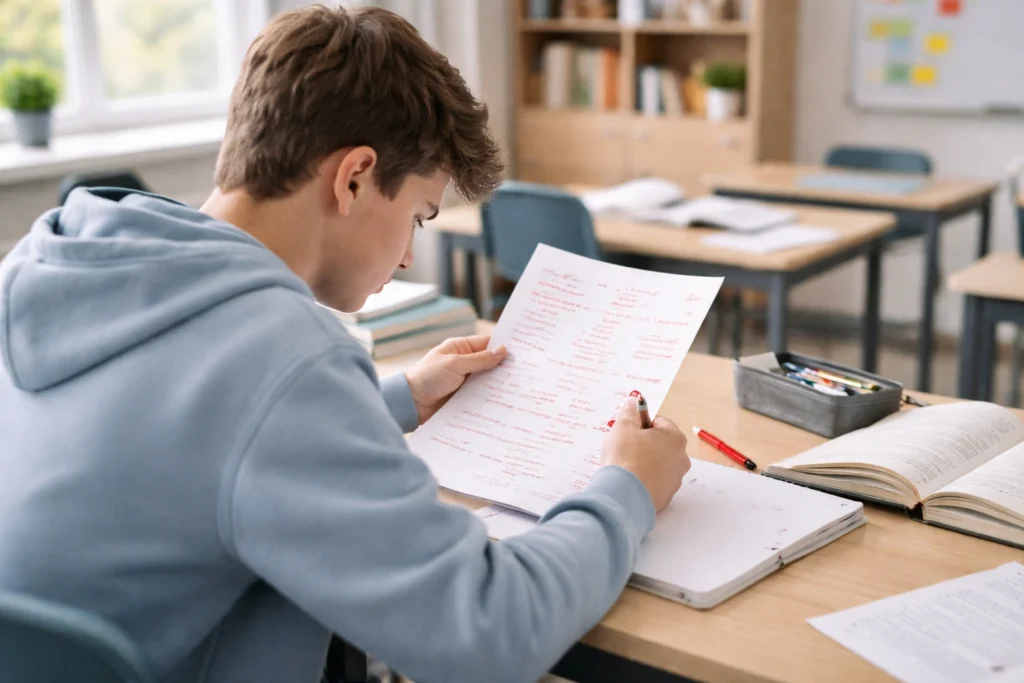
Students lose marks not because they lack knowledge, but because they can’t convey it clearly. For instance, a chemistry student might understand the concept perfectly but phrase their explanation in a way that confuses the marker.
Or a presentation gets marked down because nervous delivery garbles the main point, even though the research was solid. When you teach students to communicate clearly upfront, their answers are easier to follow, and marks reflect understanding rather than phrasing.
Group Work Becomes a Struggle
In group projects, unclear communication slows progress, causes frustration, and can leave some students doing more work than others.
You’ve probably seen one student repeat their explanation multiple times while others still struggle to understand, or deadlines missed because instructions weren’t interpreted consistently.
Teaching students to organize and express their ideas reduces these avoidable errors and helps them work more effectively.
The Real-World Gap Teachers Don’t Always See
Most teachers focus on evaluating what students know rather than how well they can explain it. However, universities and employers care just as much (sometimes more) about the ability to communicate that knowledge clearly.
That’s why it’s worth looking at the skills your students actually need when they leave your classroom:
- Explain Clearly To Non-Experts: Students must be able to convey key concepts without jargon or confusing phrasing.
- Adapt Tone For Different Audiences: Communicating with peers, supervisors, or clients requires adjusting language and level of detail.
- Organize Information Logically: Presenting ideas in a clear structure helps them land, even under pressure.
- Listen And Respond Effectively: Communication is two-way, so students need to interpret feedback and respond appropriately.
These skills will help your students after they graduate. In fact, according to the National Association of Colleges and Employers, at least 70% of employers consider written communication skills important for college graduates.
This means a student with average grades but strong communication can outperform a top-scoring student who struggles to express themselves in meetings, emails, or presentations.
What Happens When Students Can’t Express Their Ideas

When students can’t express their ideas clearly, it creates challenges in learning, participation, and future success.
Picture a talented Year 11 student who understands calculus but freezes when explaining their solution to the class. Or a bright history student whose essay reads like disconnected facts rather than a coherent argument (even though they clearly did the research).
Here’s what happens when this pattern continues:
- Confidence Erodes Fast: Repeated struggles to put thoughts into words make students avoid speaking up entirely. They stop participating in class discussions, even when they have valuable contributions, because past attempts felt embarrassing or unsuccessful (and that memory sticks).
- Opportunities Slip Away: Recommendations, scholarships, and leadership roles often go to students who communicate well, not necessarily to those who know the most. A student with average grades but strong communication skills will outcompete a brilliant student who can’t articulate their strengths during interviews or application essays.
- Career Readiness Takes a Hit: Employers expect employees to explain ideas in meetings, write coherent emails, and collaborate effectively with teams. Students who enter jobs without these skills struggle from day one, regardless of their technical knowledge.
These patterns compound over time, widening the gap between students who can express themselves and those who struggle despite similar ability levels.
Employers’ Notice Communication Before Grades
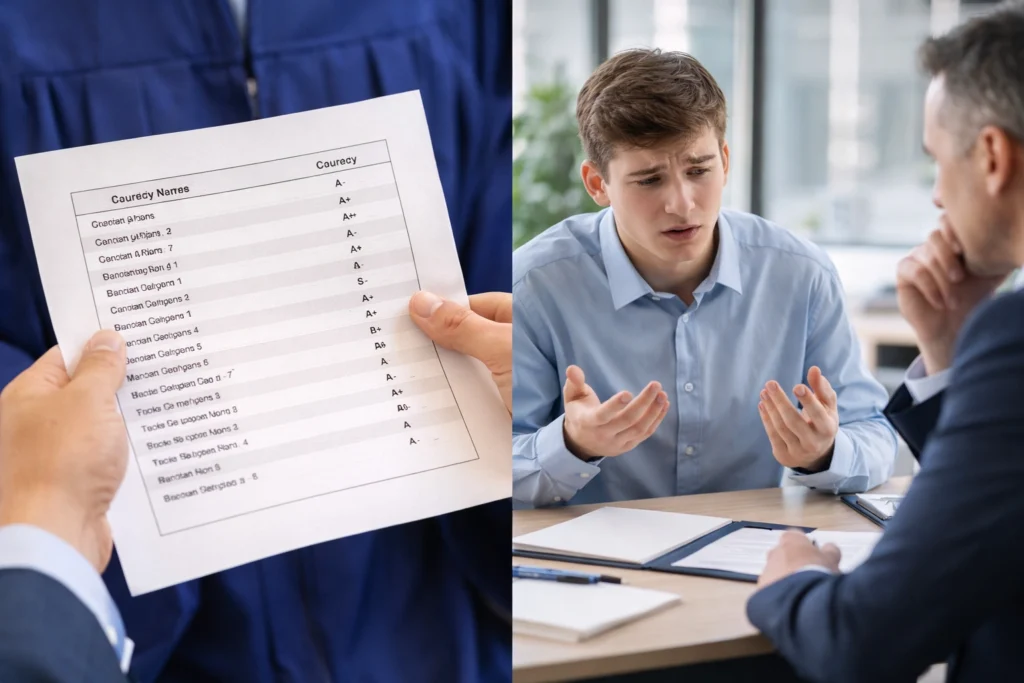
Did you know ineffective communication costs businesses over $2 trillion each year? That staggering number shows just how much employers value clear communication, and how much the gap between what they need and what graduates deliver affects students’ job prospects, even when academic achievements are strong.
In our experience placing teachers across primary and secondary schools, we see this pattern constantly. Employers prioritize clear written and verbal communication skills, yet many talented graduates struggle to express their knowledge effectively.
They get overlooked during applications, interviews, or workplace tasks; not because they lack understanding, but because they can’t convey it clearly under pressure.
You’ll notice this gap in the classroom first. For example, a student might understand the material perfectly but freeze during presentations or ramble through discussions without getting their point across. Employers face the same problem later: candidates who look brilliant on paper can’t show their value in interviews or emails.
Hiring managers usually spend just 6-8 seconds scanning a resume. So students who can’t get their strengths across clearly and quickly often risk having all their hard work go unnoticed.
Listening Skills are Half the Battle
The best communicators aren’t just good speakers. They’re excellent listeners who can read a room, pick up on unspoken cues, and respond appropriately.
Think about it this way: you can’t respond effectively if you don’t truly understand what someone’s asking. A student might phrase a question awkwardly, but listening carefully reveals the actual confusion underneath.
When your students learn to listen actively, they understand instructions more accurately and collaborate smoothly in groups. They also respond more thoughtfully during discussions instead of just waiting for their turn to speak.
This skill shows up clearly in group projects. The project flows better, conflicts decrease, and the final presentation reflects genuine collaboration rather than pieced-together individual work.
Building Confidence Through Better Communication

Students who improve their communication skills gain self-confidence quickly. We’ve seen this happen in classrooms, and it shows up in several ways:
- Classroom Participation Increases Naturally: Students speak up without forced encouragement because they know how to organize their thoughts before raising their hands.
- Assignments Improve Across Subjects: Clarity and flow get better in every subject, not just English, because the underlying skill (expressing ideas logically) transfers everywhere.
- Group Dynamics Improve: Misunderstandings decrease when everyone can articulate their ideas clearly, which makes group projects less frustrating for everyone involved.
- Presentation Anxiety Reduces With Practice: Each successful experience builds confidence for the next one, so they handle the next one more easily.
The pattern is consistent: students who learn to communicate clearly carry that confidence into everything else they do academically. A Year 9 student who structures arguments well in English starts organizing science reports better, too, because the core skill applies across contexts.
Communication Skills Shape Student Success Long-Term
Communication skills affect every part of a student’s academic and professional life. They influence grades, career opportunities, and workplace readiness in ways that build over time, with effects appearing well before graduation.
Students who can structure their thoughts, explain ideas clearly, and listen actively gain advantages that go far beyond any single assignment or presentation. These aren’t skills to develop “eventually.” They are foundational abilities that determine whether students can show what they actually know.
Want to build communication skills in your classroom? Visit MindLeap Tech to see how we support teachers and students.